Sphinx Dream Stele Karl Richard Lepsius
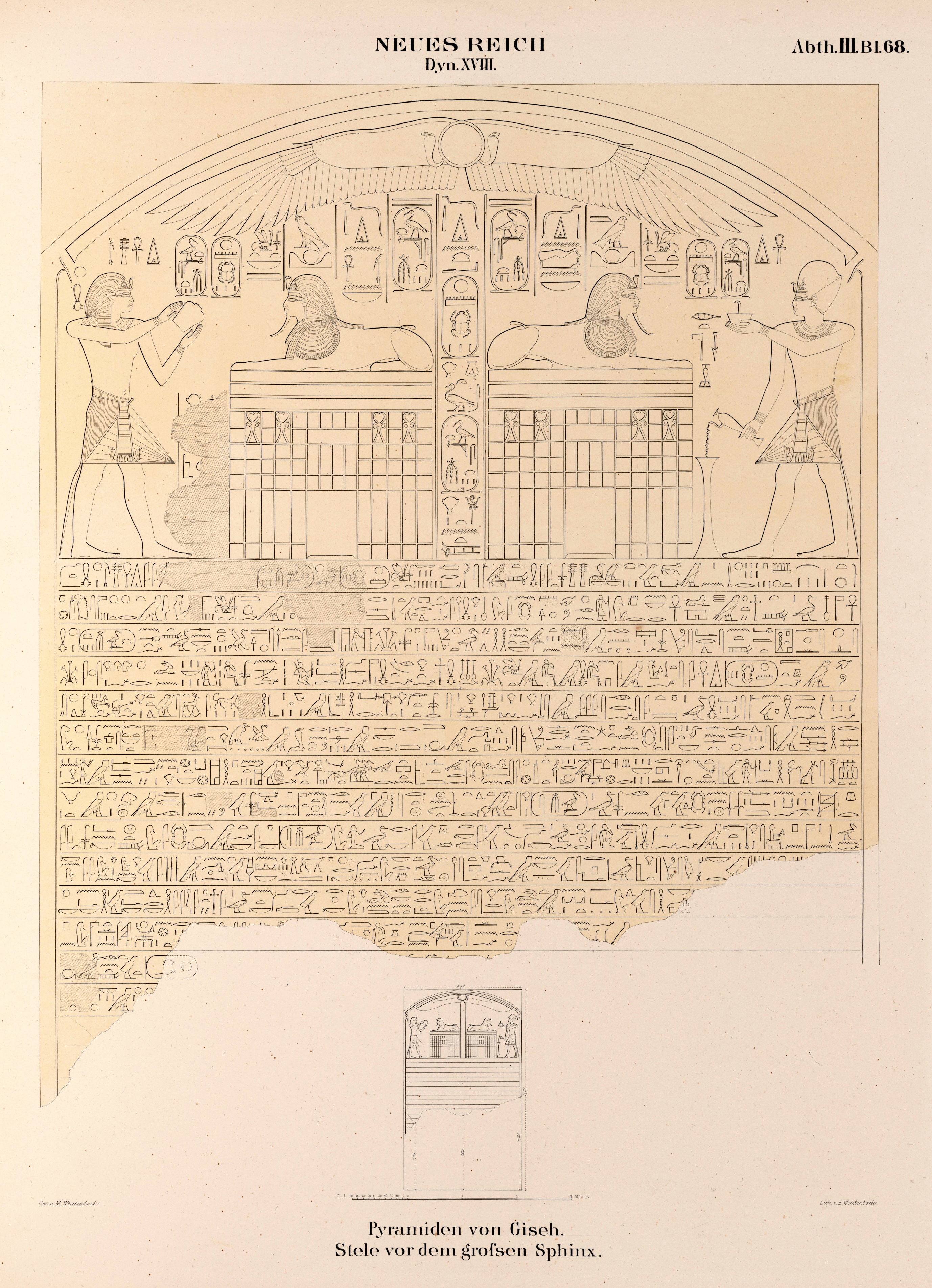
Karl Richard Lepsius: Dream Stele of Thutmose IV (1840s) — Open full-size image.
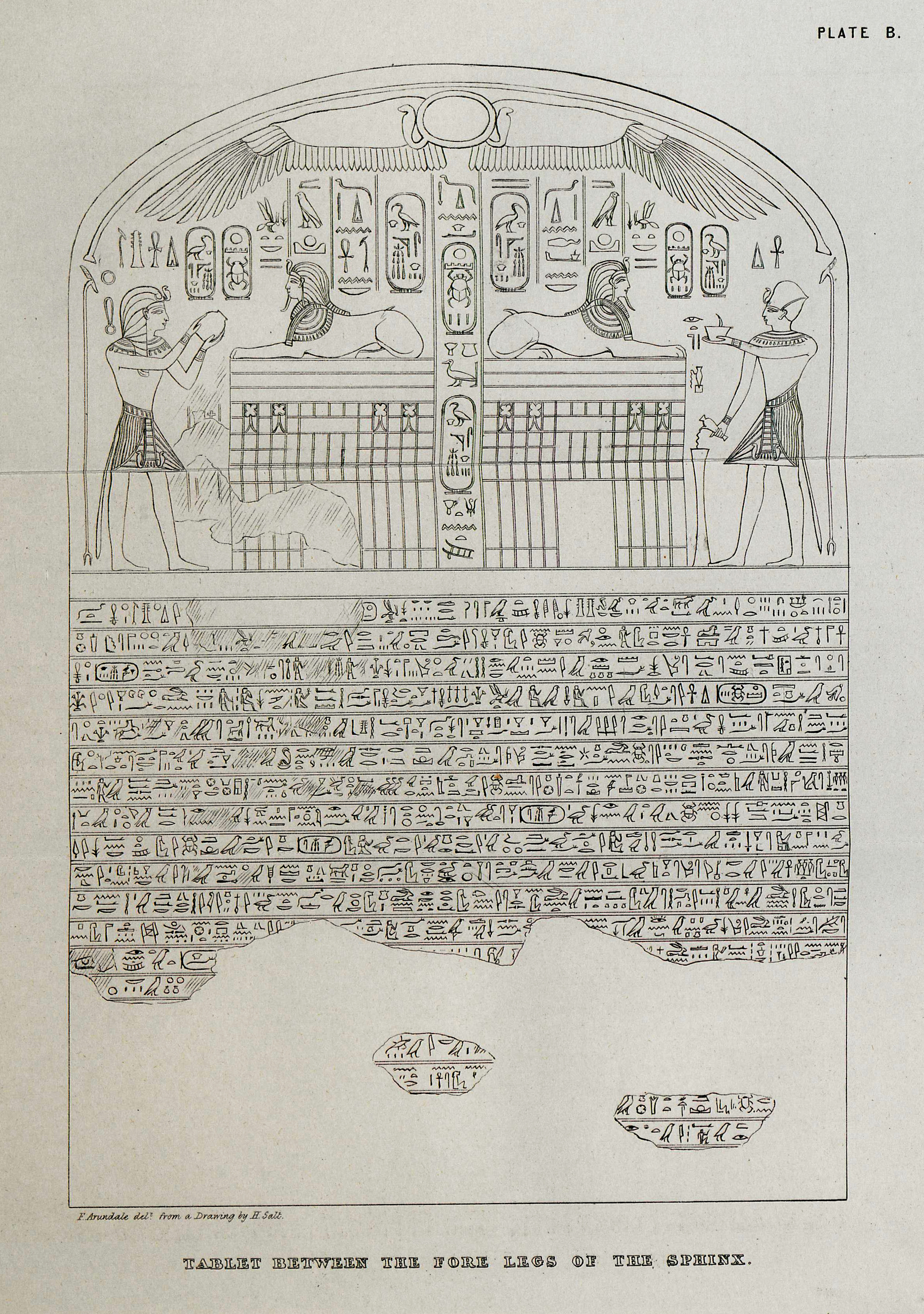
Henry Salt: the same Dream Stele, recorded during Caviglia’s excavations (1817) — Open full-size image.
At the top of this page is an illustration of the “Dream Stele” of Thutmose IV by Karl Richard Lepsius. The stele was uncovered during Caviglia’s excavations in 1817 and is thought to date to Egypt’s Eighteenth Dynasty, around 1400 BCE. It was found at the back of the small temple between the forelegs of the Great Sphinx. In the inscription, Thutmose IV claims to have been given his kingdom by the Great Sphinx itself in exchange for protecting it from the sand that was encroaching upon it. Most of the mudbrick walls that Thutmose IV built for this purpose have now been removed, although a few small sections remain.
Below it is Henry Salt’s earlier illustration, which depicts additional fragmentary signs near the bottom that are not reproduced in the same way in Lepsius’s version. The two drawings are shown together to make comparison possible, without presuming that either is necessarily more accurate.
Historical image sources: New York Public Library — Lepsius drawing; Heidelberg University Library — Vyse, 1842, plate.
Return to Image Gallery 2 — Images of the Great Sphinx from the early 19th Century